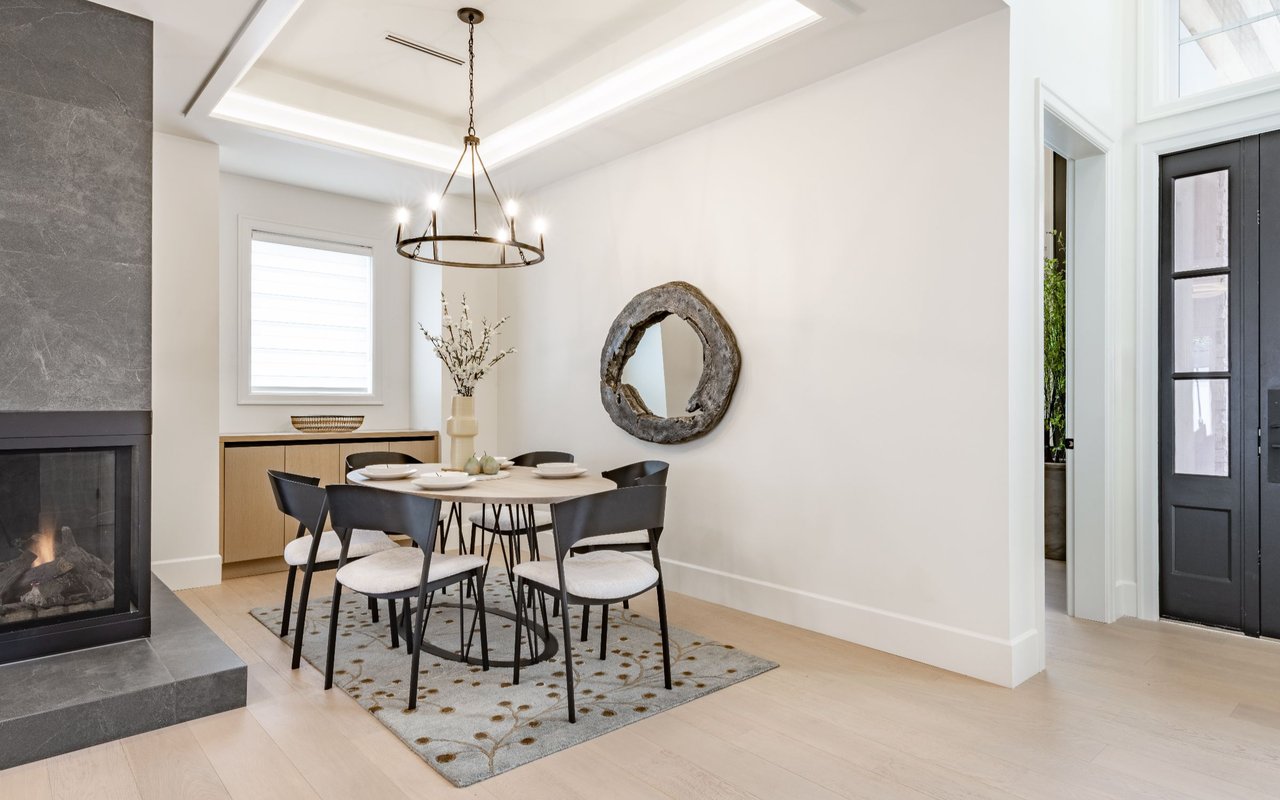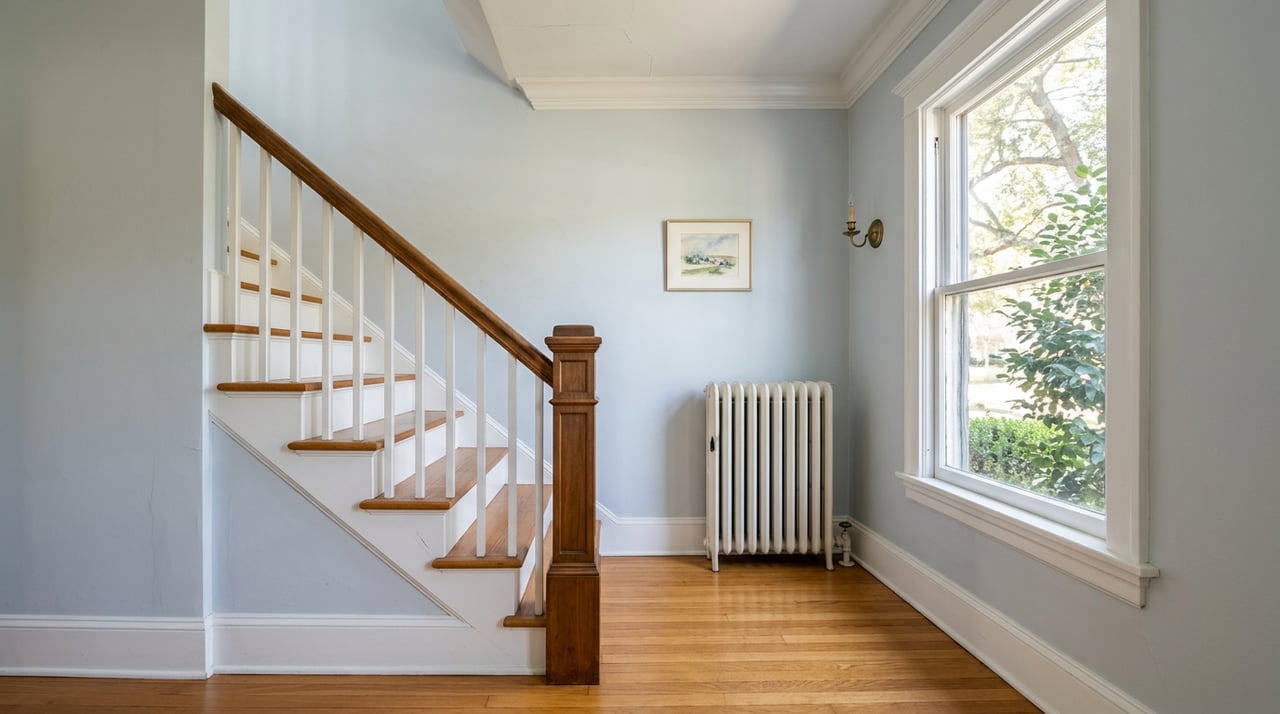
Two houses on the same block of Otis Boulevard can list for the same number and carry wildly different repair reserves behind the walls. One had its panel replaced in 2018, its polybutylene supply lines swapped for PEX, and its roof re-flashed after Hurricane Helene. The other still runs on a 60-amp service, has original cast-iron drains, and lost two limbs from a willow oak that nobody has fully looked at yet. The list price hides all of that. The inspection report reveals it. In a district built between 1906 and the early 1950s, the inspection isn't a formality on the way to closing. It's the mechanism that decides who actually pays for the house's age.
That is the thesis of this post: in Converse Heights, the inspection report is the real pricing document. Everything below is evidence for how to read it.
Why the district's age drives the report before the inspector arrives
Converse Heights is a small, defined pool of old houses. The neighborhood today includes 35 streets with more than 1,300 homes located between Pine Street and Lawson's Fork Creek, East Main Street and Crystal Drive. The historic district includes 461 contributing buildings and 65 non-contributing buildings in the Queen Anne, American Foursquare, Craftsman, Spanish Mission, Tudor, Colonial Revival, Neo-Classical and Minimal Traditional styles. It was listed in the National Register on September 25, 2007.
That age profile is not decorative context. It predicts, with uncomfortable accuracy, which systems an inspector will call out. A Foursquare built in 1912 was wired for a handful of lights and one wall receptacle per room. A Minimal Traditional built in 1948 may still have its original cast-iron drain stack. A 1970s renovation almost certainly added materials the industry has since regretted. The report writes itself before the inspector opens the crawl-space hatch.
The findings that show up most often on Converse Heights houses
A Spartanburg-based inspector who works this district directly is blunt about the pattern. Candid Home Inspections, based in Inman, notes that older Hampton Heights and Converse Heights homes especially reflect Spartanburg's high concentration of pre-1980 housing, which means asbestos siding, vermiculite insulation, asbestos floor tiles, and lead paint are real possibilities. Their broader Spartanburg findings are consistent from house to house: aluminum branch wiring from the 1960s–70s, polybutylene plumbing installed between 1978 and 1995, asbestos siding and lead paint on pre-1980 homes, foundation movement on red clay, and aging electrical service in mill-village houses.
Read that list against a 1920s Craftsman that was updated once in the late 1970s and again around 2005. You already know what the report will say.
| Finding | Era it typically dates to | Why it matters at the closing table |
|---|---|---|
| Aluminum branch wiring | 1960s–70s update | Insurance carriers may require remediation before binding a policy |
| Knob-and-tube remnants | Original wiring not fully removed | Often surfaces in attics behind newer insulation |
| Polybutylene supply lines | 1978–1995 update | Failure risk drives many repair requests |
| Asbestos-suspect siding, tile, insulation | Pre-1980 materials | Not always removed; abatement cost varies widely |
| Foundation movement | Any era, red-clay soils | Distinguishing seasonal from progressive is the whole game |
| Undersized panels, original service | Pre-1970 electrical | Often paired with knob-and-tube discovery |
None of these findings automatically kills a deal. Candid frames it plainly: they identify suspect materials and tell buyers what is worth further testing, and they document undersized panels, knob-and-tube remnants, and gravity-fed plumbing so the budget is clear. The point is not fear. The point is that the same $525,000 asking price means two different things depending on which of these items has already been retired.
The CL-100 and the other add-ons that actually matter here
South Carolina buyers financing a Converse Heights home almost always encounter one line item that surprises them: the CL-100 termite letter. CL-100 termite and wood-destroying-insect letters are required by most South Carolina lenders for VA, FHA, and many conventional loans. On a heart-pine-framed 1920s house sitting on a brick pier crawl foundation, that letter is not a rubber stamp.
Local pricing is fairly consistent. Most Spartanburg-area inspections fall in the $375–$525 range, with add-ons including CL-100 termite from $145, radon from $145, water quality from $195, and mold and air quality from $300. For comparison, home inspection fees vary by size, with a starting price of $400 for properties up to 1,000 square feet in Spartanburg and $500–$600 on average for larger homes, according to Bannon Home Inspections.
For a Converse Heights buyer, the practical read is this: budget for the base inspection plus the CL-100 plus at least one specialty item. On any house with a partially finished basement or a low crawl, moisture testing is worth the $300. On any house with additions from the 1960s or 70s, plan for the possibility of a follow-up electrical evaluation from a licensed electrician after the general inspection flags the panel.
What Helene changed about what inspectors look at
Mature canopy is one of the reasons buyers want Converse Heights in the first place. It is also one of the reasons post-storm inspections in the district are running longer than they used to. The Post and Courier noted in its Converse Heights feature that the homes are surrounded by mature trees, although Hurricane Helene took its toll on some. The same article documented how tight the market already was, reporting that of the 526 residential dwellings in Converse Heights, there were just seven on the market as of earlier that week, with prices ranging from $340,000 for a small 1921 home to $1.45 million on Connecticut Avenue.
For sellers, that combination — thin inventory and known storm exposure — cuts both ways. Buyers are willing to compete, but they are also asking sharper questions about roof age, flashing at chimney and dormer transitions, gutter capacity, drainage away from foundations, and any tree that lost a major limb. For buyers, walking the lot at the showing and looking up matters as much as looking down.
A sequence that protects both sides of the transaction
The friction in Converse Heights closings almost always comes from doing steps out of order. Two short lists.
If you are selling:
- Pull whatever permit history the previous owner left behind for panel upgrades, re-pipes, and roof replacements. Missing paperwork on a claimed upgrade reads to buyers as no upgrade at all.
- Consider a pre-listing inspection. On a 1930s house, discovering polybutylene at the buyer's inspection turns into a repair request. Discovering it before you list turns into a disclosure and a price that already reflects it.
- Order the CL-100 early. If evidence of prior treatment or active activity appears, you want time to address it, not 72 hours before closing.
If you are buying:
- Choose a general inspector who works the historic districts regularly and knows what the pier-and-beam crawls look like in this specific pocket of Spartanburg. Ask directly whether they have inspected in Converse Heights before.
- Attend the inspection. On a 100-year-old house, the walkthrough at the end is more valuable than the report.
- Sequence your specialty inspections. Let the general inspection run first, then commission the electrician, the structural engineer, or the sewer scope only where the report gives you a reason.
- Price your repair requests around insurability, not cosmetics. Aluminum wiring and an active roof leak matter to your carrier. A hairline crack in a plaster wall does not.
FAQ
Do I have to remediate aluminum wiring or polybutylene to close? Not automatically. What often forces the issue is your homeowners insurance carrier, not the lender. Get a quote early in the option period so the underwriting requirements are on the table before you negotiate repairs.
Is a CL-100 the same as a full termite inspection? No. It is a lender-driven letter documenting visible evidence of wood-destroying organisms and moisture conditions on the day of inspection. It is narrower than a general inspection and does not replace it.
How much of the historic character can I actually change? Converse Heights is a National Register district, which is an honorific designation rather than a local design overlay. It does not, by itself, restrict what an individual owner can do to a house. Any interior or exterior work still has to meet City of Spartanburg permit requirements, and the Converse Heights Neighborhood Association is a good first call for context on what neighbors have done recently.
Is a pre-listing inspection worth the cost for a smaller Converse Heights bungalow? On a house under about 1,500 square feet, the fee is modest relative to the negotiating leverage it buys. Sellers who already know what the buyer's inspector will find control the conversation about price and repairs.
If you are getting ready to buy or sell in Converse Heights and want a clear read on what your specific house is likely to show at inspection, Cindy McPhee-Barrett can walk the property with you before you write the offer or set the list price. Schedule a local market consultation to talk through the report you are likely to get and how to price around it.